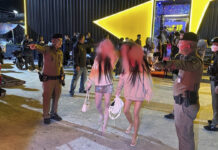
Thailand’s sex industry remains highly visible in parts of Bangkok and Pattaya despite prostitution being prohibited under the country’s 1996 Prevention and Suppression of Prostitution Act. Thailand’s ongoing industry presence poses a challenge. The authorities promote the country as an international tourism destination. They seek to distance Thailand from its longstanding link with sex tourism.
The issue has received renewed attention following the murder of a 17-year-old Thai girl allegedly involving an Australian man. The case highlighted concerns about Thailand’s nightlife economy. It also raised protection for vulnerable people and risks for workers in an industry largely outside formal employment.
From Bangkok’s Soi Cowboy to Pattaya’s Walking Street, entertainment venues associated with adult nightlife remain a familiar part of the tourism landscape. Pattaya, in particular, has long been associated with nightlife and adult entertainment. Tourism authorities have increasingly promoted the city as a destination offering beaches, restaurants, family attractions, sports and other activities.
Thailand’s prostitution legislation prohibits a range of activities connected with prostitution. These include solicitation in public places, procurement, and operating prostitution establishments. The law also provides stronger protections involving people under 18.
Thailand Sex Industry Remains a Large Informal Economy
Surang Janyam is the director of SWING, the Service Workers in Group Foundation. She estimates more than 200,000 sex workers operate across Thailand. Many are based in Bangkok and Pattaya.
SWING is a non-profit organisation providing healthcare, education and rights support to people working in the entertainment and service industries.
Ms Surang said the industry continued operating during the Covid-19 pandemic despite widespread closures of entertainment venues. Some workers moved away from traditional venues and began working independently, including through social media platforms.
She also said the workforce has become increasingly diverse in terms of gender, reflecting changes in demand and the way services are arranged.
Experts estimate Pattaya has more than 50,000 sex workers. The wider nightlife economy is believed to generate between 100 billion and 200 billion baht a year.
Walking Street, one of Pattaya’s most recognisable tourist areas, sits at the centre of much of the city’s nightlife. The pedestrianised street contains bars, clubs, restaurants and entertainment venues attracting visitors from Thailand and overseas.
“Sex workers are part of the tourism sector,” Ms Surang said, arguing that visitors using these services also spend money on accommodation, food, transportation and other activities.
Thanet Supornsahasrungsi, president of the Association of the Chonburi Tourism Federation, acknowledged the industry’s presence while pointing to efforts to develop Pattaya as a destination for a broader range of visitors.
He said some entertainment venues and massage establishments operate in a legal grey area, with allegations that sexual services are sometimes offered covertly.
According to Mr Thanet, unclear regulation creates opportunities for corruption, including allegations of officials demanding money from workers or businesses.
Prostitution Laws and Enforcement
Thailand continues to enforce legislation covering prostitution-related activities. Royal Thai Police figures cited in the original report recorded 19,648 arrests for violations of prostitution legislation in 2023, compared with 38,139 in 2022.
Ms Surang argues that the existing legal framework leaves sex workers with limited access to formal employment protections.
She said workers experiencing violence, abuse or other crimes often face difficulties when attempting to report incidents and seek legal assistance.
SWING provides healthcare and education services and helps workers communicate with police following allegations of violence or abuse.
The organisation has also supported families involved in serious criminal cases involving sex workers, including cases involving the murder of a transgender woman and the murder of the teenage girl allegedly killed by the Australian man.
Ms Surang said relations between police and sex workers have improved in some areas. She believes greater awareness among officers has helped reduce situations where workers are treated solely as offenders.
SWING also holds workshops involving police officers and sex workers in Pattaya. The sessions aim to improve communication and reduce conflict between the two groups.
Changes to Prostitution Law Enforcement
Thailand’s approach to enforcement has also changed in recent years.
The 2022 Act on the Imposition of Regulatory Fines changed the treatment of certain offences under Section 5 of the 1996 prostitution legislation. Some offences are now subject to administrative fines rather than criminal prosecution.
The responsibility for imposing these fines was transferred from police to officials working under the Ministry of Social Development and Human Security.
The changes form part of a wider debate over whether Thailand’s existing approach provides sufficient protection for workers while allowing authorities to tackle exploitation, trafficking and crimes involving minors.
Calls for Decriminalisation
SWING is among organisations calling for the repeal of the 1996 prostitution law and the introduction of a new framework recognising consensual sex work between adults as legitimate employment.
Ms Surang argues workers should have access to labour protections, social security, welfare benefits and healthcare.
Supporters of reform argue greater legal recognition would give workers stronger grounds to report violence, challenge exploitation and seek assistance without fear of prosecution.
They also argue reform would help authorities distinguish consensual adult sex work from serious crimes such as human trafficking, forced prostitution and sexual exploitation of minors.
Thailand’s existing legal framework provides specific protections for people under 18 and imposes severe penalties for procurement and exploitation involving children.
Ms Surang stressed that decriminalisation would not mean removing laws against trafficking or exploitation.
“Decriminalising sex work does not necessarily mean that more people will choose to enter the profession,” she said. She argued authorities would still retain powers to prosecute trafficking and protect minors and people subjected to coercion.
SWING is also calling for interim measures while wider legal reform remains under consideration. Its proposals include fair wages, social welfare access, labour protections and recognition of workers’ tax obligations.
A Debate Over Regulated Red-Light Districts
Another proposal focuses on zoning.
Mr Thanet has suggested establishing designated areas where adult entertainment businesses could operate under clearer regulations.
Supporters of the proposal argue designated zones would make enforcement easier while protecting residents and visitors who do not wish to encounter adult entertainment.
Such a system would also give authorities greater oversight of businesses operating within the designated areas, according to Mr Thanet.
The proposal reflects approaches used in some other countries, although legal systems and regulations differ significantly between jurisdictions.
Ms Surang takes a different position. She argues restricting adult entertainment to specific areas could create additional opportunities for corruption.
Questions would also arise over how authorities would deal with businesses operating outside designated zones and whether workers would face increased pressure from enforcement officials.
Tourism, Regulation and Thailand’s International Image
The debate surrounding the Thailand sex industry reflects a wider question about the country’s tourism strategy.
Thailand promotes a broad tourism offering that includes beaches, cultural attractions, food, wellness, shopping, luxury travel and nightlife. Bangkok and Pattaya also have large entertainment economies serving both international visitors and domestic customers.
For expatriates and tourists, the legal position remains important. Prostitution-related activities are regulated under Thai law, despite the visible presence of adult entertainment in parts of the country’s major tourist destinations.
The debate therefore extends beyond tourism branding. It involves worker safety, law enforcement, corruption, human trafficking, protection of minors and access to employment rights.
Any move towards decriminalisation or legalisation would require substantial changes to the current regulatory framework. Authorities would also need clear rules governing businesses, workers, taxation, labour protections and enforcement.
The future of the industry remains a contentious issue. Supporters of reform believe clearer regulation would improve safety and reduce exploitation. Opponents and others in the tourism sector continue to debate how Thailand should manage adult entertainment while protecting its broader tourism image.
For now, Thailand continues to operate under the existing legal framework while the debate over reform remains active.